
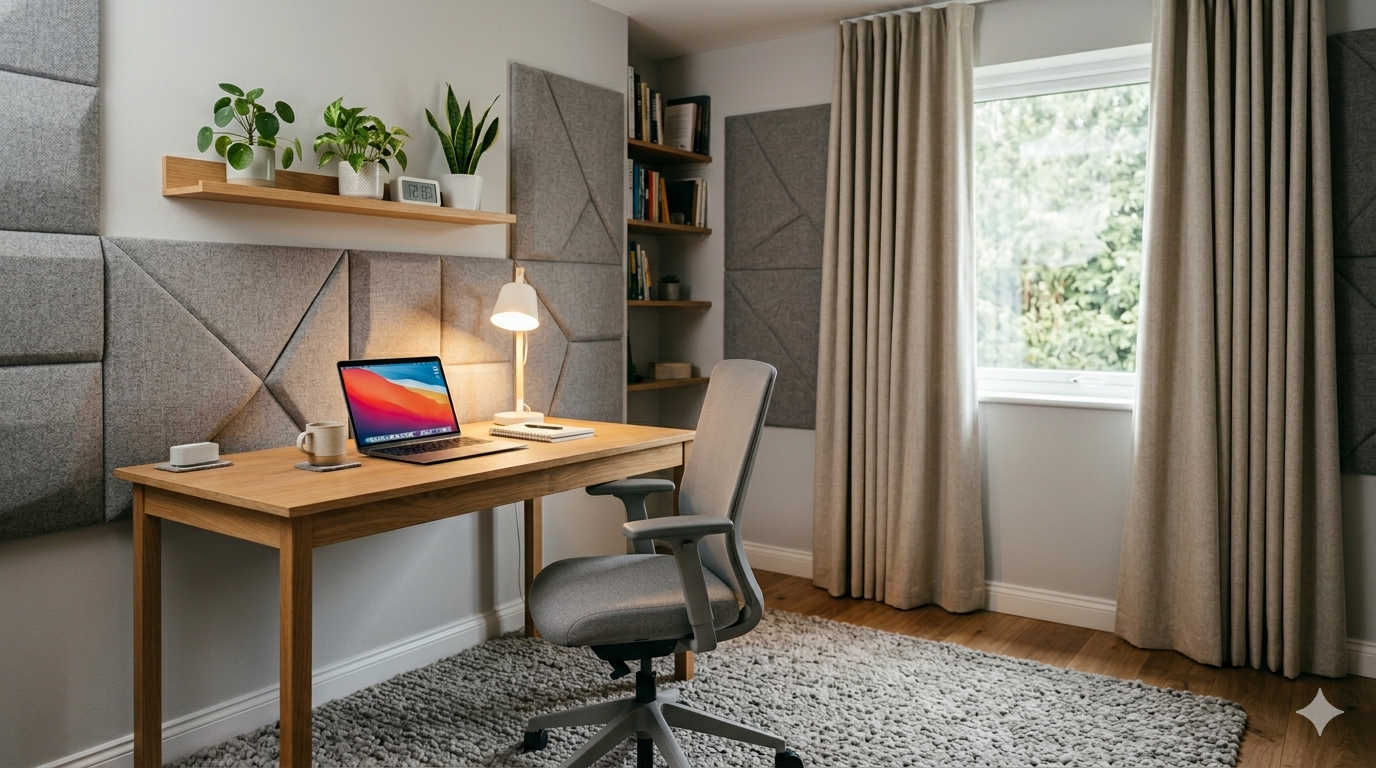
Working from home sounds ideal—until the noise kicks in. Traffic outside, conversations in the next room, barking dogs, construction, or even your own echoing voice can make it hard to concentrate. If you’ve ever struggled to focus or felt drained after a noisy workday, you’re not alone.
A quiet workspace isn’t just about comfort—it directly affects your productivity, mental clarity, and even how professional you sound on calls. The good news is that you don’t need to renovate your entire home to make a big difference.
This guide breaks down everything you need to know about reducing noise in a home office, from quick fixes to more advanced solutions. It’s designed to be practical, realistic, and easy to follow—no technical background required.
Why Noise Is a Bigger Problem Than You Think
Noise doesn’t just distract you for a moment—it interrupts your brain’s ability to stay focused. Every time you’re pulled away from a task, it can take several minutes to fully regain concentration.
Here’s how noise impacts your work:
- Reduces deep focus and productivity
- Increases stress and fatigue
- Makes virtual meetings harder to manage
- Lowers overall work quality
Even moderate background noise can affect cognitive performance. That’s why building a quieter environment is one of the most effective upgrades you can make to your home office.
Understanding the Types of Noise
Before fixing the problem, you need to understand it. Most home office noise falls into two categories:
Airborne Noise
This includes:
- Voices and conversations
- TV or music
- Traffic sounds
- Outdoor activity
These sounds travel through air and enter your space through windows, doors, and walls.
Structure-Borne (Impact) Noise
This includes:
- Footsteps
- Furniture movement
- Vibrations from appliances
These sounds travel through solid structures like floors and walls.
A good noise reduction setup addresses both types.
Start With the Easiest Fix: Seal the Gaps
One of the most overlooked causes of noise is small openings. Sound travels easily through gaps around doors, windows, and even electrical outlets.
What to Check:
- Door frames
- Window edges
- Gaps under doors
- Cracks in walls
Simple Solutions:
- Weatherstripping tape
- Door sweeps
- Acoustic sealant
These are inexpensive, easy to install, and can make an immediate difference. If your room “leaks” air, it’s also leaking sound.
Upgrade Your Door for Better Sound Blocking
Doors are one of the weakest points in any room when it comes to noise.
Quick Improvements:
- Add a door sweep at the bottom
- Use draft blockers
- Apply foam weatherstrips
Bigger Upgrade:
- Replace hollow-core doors with solid-core doors
Solid doors are much denser and significantly reduce sound transmission.
Reduce Outside Noise Through Windows
Windows are a major entry point for noise, especially if you live near a busy street.
Practical Solutions:
1. Thick Curtains
Heavy, layered curtains (often called soundproof curtains) can absorb a surprising amount of noise.
2. Window Inserts
These are clear panels installed inside your existing window frame to create an extra barrier.
3. Double Glazing
If you’re willing to invest more, double-glazed windows offer strong long-term noise reduction.
Pro Tip:
Make sure curtains extend beyond the window edges and reach the floor for maximum effect.
Use Soft Materials to Absorb Sound
Hard surfaces reflect sound, which creates echo and amplifies noise. Soft materials absorb it.
Add These to Your Workspace:
- Rugs or carpets
- Fabric chairs
- Cushions
- Wall hangings
Even adding a thick rug can noticeably reduce echo and improve overall sound quality.
Treat Your Walls for Better Acoustics
Bare walls reflect sound waves, making your room feel louder than it actually is.
Effective Wall Treatments:
Acoustic Foam Panels
These are lightweight and easy to install. They reduce echo but don’t block outside noise entirely.
Fabric Panels
More effective than foam, these absorb a wider range of frequencies.
DIY Option
You can create panels using wooden frames, insulation, and fabric—often at a lower cost.
Placement Tips:
- Behind your desk
- On walls facing noise sources
- At reflection points (where sound bounces)
Don’t Forget the Floor
Noise can travel through floors, especially in apartments or multi-story homes.
Solutions:
- Thick carpets
- Rubber mats
- Acoustic underlays
These help reduce both incoming noise and vibrations from your own movements.
Rearrange Your Furniture Strategically
Sometimes, you don’t need new materials—just a better layout.
Smart Layout Ideas:
- Place bookshelves against shared walls
- Position your desk away from windows
- Use large furniture as sound barriers
Bookshelves filled with books are especially effective at diffusing sound.
Use Room Dividers in Shared Spaces
If your home office is part of a larger room, noise control becomes more challenging.
Helpful Options:
- Folding partitions
- Curtains as separators
- Portable acoustic screens
These don’t completely block sound, but they reduce direct noise exposure and improve focus.
Manage Noise From Inside Your Home
Sometimes the biggest noise source is within your own house.
Common Culprits:
- Kitchen appliances
- Fans and air conditioners
- Other people
What You Can Do:
- Schedule quiet hours if possible
- Move noisy devices further away
- Upgrade to quieter equipment
Even small adjustments can make a big difference over time.
Try Noise Masking Techniques
If you can’t eliminate noise completely, masking it can help.
Options to Consider:
- White noise machines
- Ambient sound apps
- Soft instrumental music
The goal is to replace unpredictable noise with a consistent, less distracting sound.
Recommended Products for Noise Reduction
Here are some commonly used products that can help improve your home office environment:
1. Soundproof Curtains
Look for:
- Thick, multi-layered fabric
- Floor-length coverage
- Thermal insulation features
2. Acoustic Panels
Best for:
- Reducing echo
- Improving call quality
- Creating a professional sound environment
3. Door Draft Stoppers
Affordable and effective for blocking sound leaks under doors.
4. White Noise Machines
Ideal for masking background noise, especially in busy households.
5. Rugs and Carpet Pads
Choose dense, high-pile materials for better sound absorption.
Advanced Soundproofing Options
If you need near-silence—for recording, streaming, or high-level work—you may want to explore more advanced solutions.
High-End Methods:
- Mass-loaded vinyl (MLV) barriers
- Double drywall installation
- Floating floors
- Full acoustic insulation
These require more investment but provide significantly better results.
Common Mistakes to Avoid
1. Expecting Complete Silence
No standard home setup can block all noise. Aim for reduction, not perfection.
2. Using Only Foam Panels
Foam helps with echo, not external noise. Combine it with other methods.
3. Ignoring Small Gaps
Tiny openings can let in a surprising amount of sound.
4. Overcrowding the Room
Too much furniture can make the space uncomfortable without improving acoustics.
Budget-Friendly Setup Plan
If you’re on a tight budget, start here:
- Seal door and window gaps
- Add a thick rug
- Use heavy curtains
- Rearrange furniture
- Add DIY wall panels
This combination can significantly reduce noise without spending much.
Mid-Range Setup Plan
For a more noticeable upgrade:
- Install acoustic panels
- Add window inserts
- Upgrade your door
- Use a white noise machine
Premium Setup Plan
For professional-level sound control:
- Double-glazed windows
- Full wall insulation
- Floating floor system
- Acoustic ceiling treatment
Frequently Asked Questions (FAQs)
How can I reduce noise in my home office cheaply?
Start with sealing gaps, adding rugs, and using thick curtains. These are low-cost but highly effective.
Do acoustic panels block outside noise?
Not really. They reduce echo inside the room but don’t stop sound from entering. For that, you need denser materials or sealing solutions.
What is the best way to block traffic noise?
Focus on windows. Use soundproof curtains, window inserts, or double glazing for the best results.
Is white noise good for productivity?
Yes, for many people. It helps mask distracting sounds and creates a consistent background environment.
Can I soundproof a room completely?
In most homes, complete soundproofing isn’t realistic. However, you can reduce noise to very manageable levels with the right combination of techniques.
Where should I place acoustic panels?
Place them:
- Behind your desk
- On walls facing noise sources
- At points where sound reflects
Final Thoughts
Creating a quieter home office doesn’t have to be complicated or expensive. The key is understanding where noise is coming from and applying the right combination of solutions.
Start small—seal gaps, add soft materials, and adjust your layout. Then build from there if needed. Even a few changes can dramatically improve your focus, comfort, and overall work performance.
A quiet workspace isn’t just a luxury—it’s a powerful tool for doing your best work every day.
Quick Action Checklist
- Seal all gaps around doors and windows
- Add rugs, curtains, and soft furnishings
- Install acoustic panels where needed
- Rearrange furniture for better sound flow
- Consider noise masking if necessary
If you take these steps one by one, you’ll gradually transform your home office into a space that feels calm, controlled, and built for productivity.