
Working from home is no longer just a temporary trend. For many professionals, freelancers, entrepreneurs, and students, the home office has become a permanent part of everyday life. While this shift offers greater flexibility and convenience, it also brings an often-overlooked downside—increased electricity consumption.
A modern home office typically includes a laptop or desktop computer, one or two monitors, a Wi-Fi router, charging stations, speakers, printers, desk lighting, and sometimes even a portable heater or air conditioner. Individually, these devices may not consume much electricity, but together they can significantly increase monthly energy costs.
The good news is that energy-saving technology has advanced considerably in recent years. In 2026, smart home office gadgets do much more than switch devices on and off. Many products now use artificial intelligence, occupancy detection, automated scheduling, and energy monitoring to reduce unnecessary power consumption without interrupting your workflow.
Whether you’re upgrading an existing workspace or setting up a new home office, choosing energy-efficient gadgets can help you save money, improve productivity, and reduce your environmental footprint. This guide explores the most practical energy-saving devices available in 2026 and explains how each one contributes to a smarter, more efficient workspace.
Why Energy Efficiency Should Be a Priority
Many people focus on buying faster computers or larger monitors but overlook how much electricity these devices use over time. A home office operates for several hours each day, often five or six days a week. Even equipment left in standby mode continues drawing small amounts of power around the clock, a phenomenon commonly known as phantom power.
Although standby consumption may seem insignificant, it adds up throughout the year. Chargers left plugged in, monitors that never fully power down, and printers waiting in sleep mode all contribute to unnecessary energy use.
Creating an energy-efficient office isn’t simply about lowering utility bills. It also helps extend the lifespan of electronic devices by reducing excess heat and continuous operation. Lower electricity consumption also supports environmental sustainability by decreasing household energy demand.
Fortunately, improving efficiency doesn’t require a complete office makeover. A few carefully selected gadgets can automate power management and deliver noticeable savings with very little effort.
Smart Power Strips: A Small Upgrade with Big Benefits
One of the most cost-effective improvements you can make is replacing a traditional power strip with a smart version.
Unlike standard power strips, smart models recognize when a primary device—such as your computer—has been turned off. Once the computer powers down, the strip automatically disconnects electricity from connected accessories like monitors, speakers, printers, or external hard drives that would otherwise continue drawing standby power.
Many newer models also allow each outlet to be controlled individually through a mobile application. This means you can schedule devices to switch off at specific times, activate them remotely, or create automated routines based on your work schedule.
For anyone working regular office hours, this simple upgrade can eliminate a surprising amount of wasted electricity over the course of a year.
Smart Plugs Make Everyday Devices More Efficient
Smart plugs remain one of the easiest ways to make existing office equipment more energy efficient without replacing it.
These compact devices fit between a wall outlet and an appliance, allowing you to control power remotely while monitoring electricity usage in real time. Instead of guessing which device consumes the most power, you can view detailed energy reports directly from a smartphone app.
Automation is where smart plugs truly shine. Imagine your desk lamp turning on automatically each morning before work begins or your coffee machine switching itself off after your final meeting. These small conveniences not only save electricity but also simplify your daily routine.
For people who occasionally forget to switch off equipment before leaving the house, remote control provides additional peace of mind.
Upgrade Your Lighting with Modern LED Desk Lamps
Good lighting plays an essential role in maintaining focus and reducing eye strain during long working hours. Fortunately, today’s LED desk lamps provide excellent illumination while using only a fraction of the electricity required by older lighting technologies.
The latest models available in 2026 include features such as automatic brightness adjustment, customizable color temperatures, built-in motion sensors, and even wireless phone charging. These intelligent functions allow the lamp to adapt to your surroundings instead of operating at full brightness all day.
Choosing a high-quality LED lamp not only reduces electricity costs but also creates a more comfortable working environment, particularly during evening hours when natural daylight is limited.
Smart Thermostats Help Control the Biggest Energy Expense
For many households, heating and cooling consume more electricity than office equipment itself.
A smart thermostat addresses this challenge by learning your daily routine and adjusting indoor temperatures automatically. Instead of maintaining the same temperature throughout the day, the system heats or cools your office only when it’s actually being used.
Many models also analyze local weather conditions and provide monthly energy reports that highlight opportunities for additional savings. Some systems even detect when everyone has left the house and temporarily reduce heating or cooling until someone returns.
Over time, these automated adjustments can noticeably reduce electricity usage while maintaining a comfortable working environment.
Occupancy Sensors Eliminate Unnecessary Power Usage
It’s surprisingly easy to leave office lights, fans, or portable heaters running after stepping away from your desk. Occupancy sensors solve this problem by automatically detecting whether a room is being used.
When no movement is detected for a predetermined period, connected devices switch off automatically. As soon as someone returns, lighting or other equipment can reactivate without requiring any manual input.
Because this process happens in the background, users save energy without changing their normal habits. It’s one of the simplest examples of how automation can improve efficiency with virtually no ongoing effort.
Monitor Electricity Consumption Before Making Bigger Investments
Many homeowners assume they know which appliances consume the most electricity, but real-world usage often tells a different story.
Whole-home energy monitors provide detailed insights into daily electricity consumption and identify which devices account for the largest share of your power bill. Instead of relying on estimates, you can make informed decisions backed by real usage data.
Some advanced systems even recognize individual appliances automatically, making it easier to identify hidden sources of energy waste. Understanding your consumption patterns often leads to better purchasing decisions and more effective energy-saving strategies in the future.
Best Energy-Saving Gadgets Worth Buying in 2026
If you’re planning to upgrade your workspace, focus on products that deliver measurable benefits rather than simply adding more smart devices.
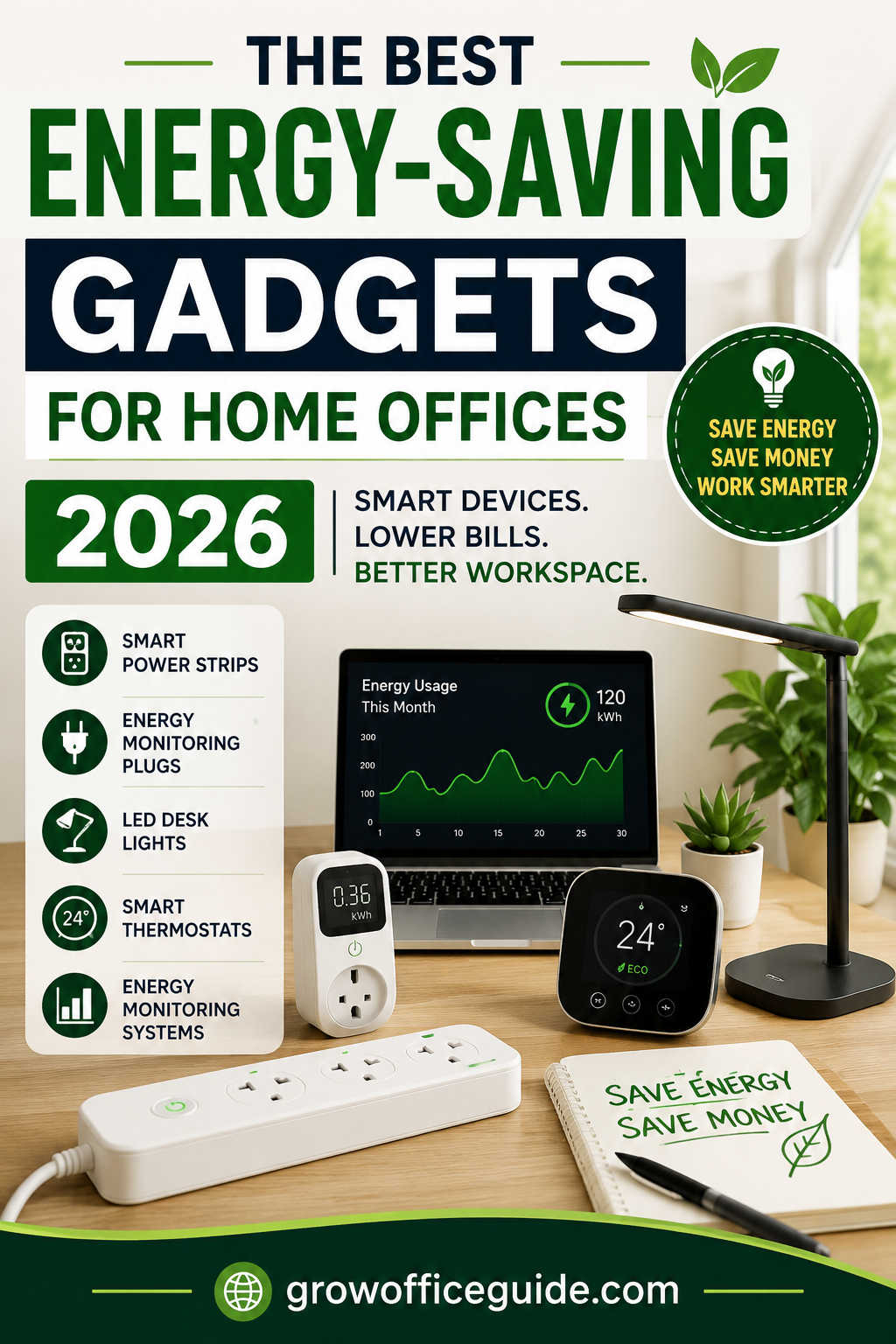
A smart power strip remains one of the best entry-level investments because it reduces standby power from multiple devices with minimal setup. Pairing it with a few energy-monitoring smart plugs provides greater visibility into your electricity usage while allowing you to automate everyday equipment.
Replacing an older desk lamp with a modern LED model is another worthwhile upgrade, especially if you spend long hours working at your desk. If climate control contributes significantly to your electricity bill, a smart thermostat can offer one of the highest long-term returns by reducing unnecessary heating and cooling.
Finally, if you want a comprehensive overview of household energy usage, investing in a whole-home energy monitoring system can help uncover savings that would otherwise go unnoticed. Although it requires a larger initial investment, many homeowners recover the cost through improved energy efficiency over time.
AI-Powered Energy Management Is Changing Home Offices
Artificial intelligence has become one of the biggest innovations in energy management. Instead of relying solely on timers or manual schedules, AI-powered systems learn how you use your workspace and automatically make adjustments to reduce unnecessary electricity consumption.
For example, if you usually start work at 9:00 a.m., your smart lighting can gradually turn on before you begin. If you leave your desk for lunch, the system can dim the lights, reduce heating or cooling, and switch idle devices into low-power mode. At the end of the workday, it can power down connected equipment without requiring any action from you.
The biggest advantage of AI automation is that it adapts over time. As your work habits change, the system continuously optimizes energy usage, helping you save electricity without affecting productivity.
Energy-Efficient Monitors Deliver Better Performance with Lower Power Consumption
The monitor is one of the most frequently used devices in any home office. Since it often remains on throughout the workday, choosing an energy-efficient model can noticeably reduce electricity usage over time.
Many of the latest monitors include intelligent brightness adjustment, which automatically adapts the screen to the surrounding light. This not only saves energy but also reduces eye strain during long work sessions.
When shopping for a new monitor, look for features such as automatic sleep mode, low standby power consumption, adjustable brightness controls, and certified energy-efficient operation. While these improvements may seem small individually, they contribute to meaningful savings over several years of daily use.
Solar Charging Solutions Are Becoming More Practical
Renewable energy is becoming increasingly accessible for home offices. Although installing rooftop solar panels may not be practical for everyone, smaller solar-powered charging solutions are now widely available.
Portable solar chargers can help power smartphones, wireless earbuds, tablets, and power banks using sunlight instead of household electricity. While they won’t replace your primary power source, they can reduce dependence on the electrical grid for charging smaller devices.
Homeowners already using residential solar panels can benefit even more by scheduling energy-intensive tasks during daylight hours, making better use of the electricity generated by their solar system.
Choosing the Right Energy-Saving Gadgets
With so many smart products available, it’s important to focus on value rather than simply buying the newest technology.
Start by identifying where your home office uses the most electricity. If several devices remain plugged in all day, a smart power strip is likely to provide immediate benefits. If heating or cooling represents a significant portion of your electricity bill, investing in a smart thermostat may produce greater long-term savings.
Compatibility is another important consideration. Choosing gadgets that work together within the same smart home platform makes automation easier and creates a more seamless experience.
It’s also wise to prioritize products from manufacturers with a proven reputation for reliability, regular software updates, and strong customer support. A well-designed device often delivers better long-term value than a cheaper alternative with limited functionality.
Recommended Energy-Saving Gadgets for Home Offices in 2026
If you’re looking for the best balance between affordability and long-term savings, consider upgrading your office in stages instead of replacing everything at once.
Begin with a smart power strip to eliminate standby power from multiple devices. Next, install a few smart plugs with energy monitoring so you can identify which electronics consume the most electricity. Replacing an older desk lamp with a modern LED model is another inexpensive improvement that enhances both comfort and efficiency.
If your workspace becomes too warm in summer or too cold in winter, a smart thermostat is often one of the most effective upgrades because heating and cooling usually account for the largest share of household energy use.
For professionals who want complete visibility into their electricity consumption, a whole-home energy monitor is an excellent long-term investment. It helps identify hidden energy waste and provides valuable insights that support smarter purchasing decisions in the future.
Rather than viewing these products as expenses, think of them as investments that gradually pay for themselves through lower electricity bills and improved equipment efficiency.
Simple Habits That Maximize Energy Savings
Even the most advanced gadgets work best when paired with smart everyday habits.
Allow your computer and monitor to enter sleep mode whenever they’re not being used. Disconnect chargers that have finished charging, as many continue drawing small amounts of electricity even after devices reach full battery.
Whenever possible, take advantage of natural daylight instead of relying solely on artificial lighting. Keeping air vents clean and ensuring your computer has proper ventilation also improves efficiency by reducing unnecessary heat buildup.
Regular software updates are another often-overlooked way to improve energy efficiency. Manufacturers frequently release firmware updates that optimize battery life and reduce background power consumption.
These simple habits require very little effort but can significantly increase the effectiveness of your energy-saving gadgets.
Common Mistakes to Avoid
Many people purchase smart devices expecting immediate savings but overlook how those devices are configured.
One common mistake is buying energy-saving gadgets without enabling automation features. A smart plug used like a regular outlet offers little benefit unless schedules or automatic routines are configured.
Another mistake is focusing only on purchase price. Cheaper products may lack accurate energy monitoring, dependable automation, or long-term software support, reducing their overall value.
It’s also important to avoid replacing perfectly functional equipment solely because a newer model is available. Upgrading makes the most sense when an older device consumes significantly more electricity or no longer meets your daily needs.
A thoughtful, gradual approach usually delivers better financial returns than replacing everything at once.
The Future of Energy-Efficient Home Offices
The next generation of home office technology is expected to become even more intelligent.
Artificial intelligence will continue improving automation by predicting work schedules, adjusting power consumption based on electricity pricing, and coordinating multiple smart devices without user input. Advances in battery storage, smart windows, and renewable energy integration will further reduce household electricity consumption.
As these innovations become more affordable, homeowners will gain access to increasingly sophisticated tools for managing energy without sacrificing comfort or productivity.
The future home office will not only be smarter but also more sustainable.
Frequently Asked Questions
Which energy-saving gadget offers the fastest return on investment?
For most home offices, a smart power strip provides one of the quickest returns because it eliminates standby power from several devices at once while requiring very little setup.
Do smart plugs actually reduce electricity bills?
Yes. Smart plugs help reduce energy costs by scheduling devices to switch off automatically and by identifying appliances that consume unnecessary electricity while idle.
Is a smart thermostat worth buying for a home office?
If you spend several hours working from home each day, a smart thermostat can significantly reduce heating and cooling costs by adjusting temperatures according to your schedule.
Are energy-efficient monitors better than standard monitors?
Modern energy-efficient monitors consume less electricity while offering improved brightness, better color accuracy, and advanced eye-care features, making them an excellent long-term investment.
Can small upgrades really make a noticeable difference?
Absolutely. While each device saves a relatively small amount of electricity on its own, combining several energy-saving gadgets with good daily habits can substantially reduce annual energy consumption.
Final Thoughts
Building an energy-efficient home office in 2026 is about making smarter choices rather than simply purchasing more technology. The most effective workspace combines automation, efficient hardware, and practical everyday habits to reduce unnecessary electricity use while maintaining a comfortable and productive environment.
Start with high-impact upgrades such as smart power strips, LED lighting, and energy-monitoring smart plugs before expanding to advanced solutions like smart thermostats and whole-home energy monitoring systems. By upgrading gradually, you can spread the cost over time while enjoying steady reductions in energy consumption and monthly utility bills.
As smart home technology continues to evolve, creating a sustainable home office will become easier than ever. Investing in energy-efficient gadgets today not only lowers operating costs but also helps future-proof your workspace for years to come.