
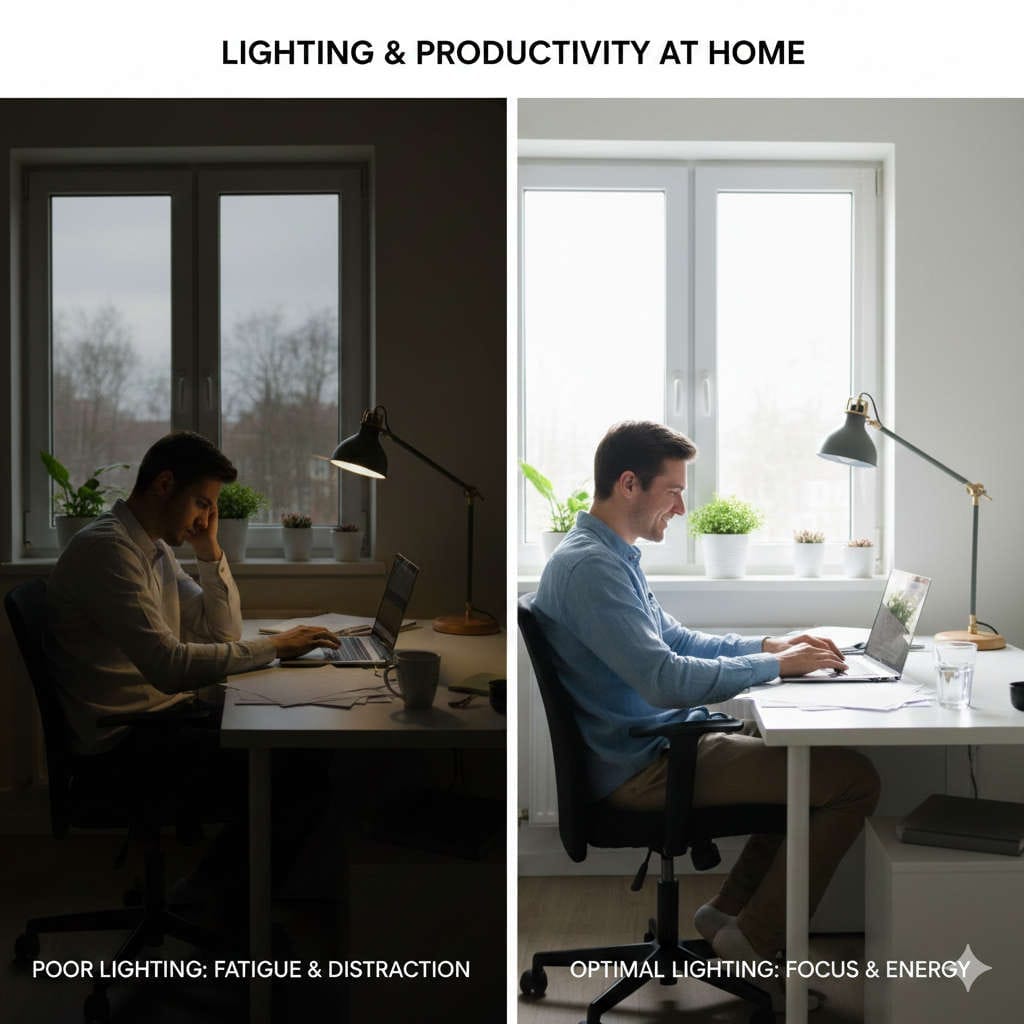
Working from home has changed how people experience productivity. The flexibility is undeniable, but so are the distractions, fatigue, and blurred boundaries between personal and professional life. While many home workers focus on ergonomic chairs, standing desks, or productivity apps, one critical factor is often underestimated: lighting.
Lighting does far more than simply help you see your screen. It directly affects your energy levels, concentration, mood, eye health, and even sleep quality. The right lighting setup can make you feel alert and motivated, while poor lighting can leave you drained, distracted, and frustrated—often without you realizing why.
This article explores how lighting affects productivity at home in a practical, easy-to-understand way. It goes beyond theory and offers actionable advice you can apply immediately, regardless of your space or budget.
How Light Influences the Human Brain and Body
Light is a powerful biological signal. The human body evolved around the natural cycle of daylight and darkness, and modern indoor lighting has a profound impact on how we function.
The Role of Light in Regulating Energy and Focus
Light sends signals to the brain that determine whether it is time to be alert or to rest. Bright light, especially light with cooler tones, stimulates the brain and increases alertness. Dim or warm light signals the brain to slow down and prepare for rest.
When lighting does not match your work schedule—such as working in dim conditions during the day or harsh lighting late at night—your brain receives mixed signals. This can result in sluggishness, headaches, difficulty focusing, or poor sleep later on.
The Connection Between Lighting and Mood
Lighting also plays a role in emotional well-being. Poor lighting can contribute to irritability, stress, and even symptoms associated with low mood. On the other hand, well-balanced lighting can create a sense of calm, motivation, and mental clarity.
For people working from home, where social interaction may already be limited, lighting becomes even more important in maintaining a positive mental state throughout the day.
Natural Light: The Foundation of a Productive Home Workspace
Natural light is one of the most effective tools for improving productivity and overall well-being at home.
Benefits of Natural Light for Home Workers
Natural daylight helps regulate the body’s internal clock, supports healthy sleep patterns, and improves alertness during working hours. People who work near windows often report higher energy levels, better mood, and reduced eye strain.
Daylight also provides balanced illumination that makes reading, writing, and screen work more comfortable when managed properly.
How to Use Natural Light Effectively
Simply having a window is not enough. The way you position your workspace matters.
- Place your desk near a window if possible, but avoid facing the window directly.
- Position screens perpendicular to windows to reduce glare.
- Use sheer curtains or blinds to diffuse harsh sunlight.
- Adjust your workspace throughout the day if light levels change dramatically.
If your home has limited access to daylight, do not worry. Artificial lighting can be optimized to closely mimic natural conditions when done correctly.
Understanding the Different Types of Lighting at Home
A productive home workspace relies on layered lighting rather than a single light source.
Ambient Lighting: Setting the Base
Ambient lighting provides overall illumination for a room. This typically comes from ceiling lights or recessed fixtures. Its purpose is to prevent dark corners and create a comfortable base level of brightness.
A well-lit room reduces eye strain by minimizing the contrast between your screen and surrounding space.
Task Lighting: Supporting Focused Work
Task lighting is the most important lighting layer for productivity. It directly illuminates your work area, such as your desk or reading surface.
Desk lamps with adjustable arms and brightness controls are ideal. Proper task lighting reduces eye fatigue, improves accuracy, and helps maintain focus during detailed tasks.
Accent Lighting: Enhancing Comfort and Atmosphere
Accent lighting is often decorative, but it also contributes to comfort. Soft light sources placed behind monitors or along walls can reduce harsh contrasts and make a workspace feel more inviting.
While accent lighting should never replace task lighting, it can significantly improve how pleasant your workspace feels during long workdays.
How Color Temperature Impacts Productivity at Home
Color temperature refers to how warm or cool a light appears and plays a crucial role in how your brain responds to it.
Cool Light for Focus and Alertness
Cool light, which appears bright and slightly bluish, is excellent for concentration-heavy tasks. It helps increase alertness and supports mental clarity, making it ideal for morning and midday work sessions.
This type of light works well for analytical work, meetings, writing, coding, and studying.
Warm Light for Comfort and Relaxation
Warm light creates a softer, more relaxed atmosphere. While it is less effective for intense focus, it is perfect for winding down at the end of the workday or for creative thinking sessions.
Using warm light in the evening helps signal to your brain that it is time to slow down, supporting healthier sleep patterns.
Finding the Right Balance
The most productive home offices use adjustable lighting that can shift between cooler and warmer tones throughout the day. This approach aligns lighting with your natural energy cycles and prevents burnout.
Brightness Levels and Their Effect on Performance
Brightness, often overlooked, directly affects how comfortable and productive your workspace feels.
Why Too Little Light Reduces Productivity
Insufficient lighting forces your eyes to work harder, leading to eye strain, headaches, and fatigue. This often results in frequent breaks and reduced concentration.
Dim environments can also lower alertness, making it harder to stay motivated during long work sessions.
The Problem with Overly Bright Lighting
Excessively bright lighting can be just as problematic. Harsh overhead lights or intense desk lamps can cause glare, reflections on screens, and visual discomfort.
The goal is balanced brightness—enough to see clearly without overwhelming the eyes.
Adjustable Lighting Is the Best Solution
Dimmable lights allow you to tailor brightness levels to your tasks, time of day, and personal comfort. This flexibility significantly improves long-term productivity and comfort.
Managing Glare, Reflections, and Shadows
Even high-quality lighting can become a productivity killer if glare and shadows are not managed properly.
Common Sources of Glare in Home Offices
- Direct sunlight hitting your screen
- Uncovered overhead lights
- Shiny desk surfaces
- Poorly positioned desk lamps
Glare forces the eyes to constantly adjust, leading to visual fatigue and frustration.
Practical Ways to Reduce Glare
- Position lights behind or beside your workspace, not directly in front
- Use matte desk surfaces when possible
- Adjust screen brightness to match ambient lighting
- Add diffusers or lamp shades to soften light
Eliminating Distracting Shadows
Shadows often occur when lighting comes from a single direction. Using multiple light sources helps distribute light evenly and reduces harsh contrasts.
Lighting and Eye Health for Remote Workers
Long hours in front of screens already strain the eyes, and poor lighting makes the problem worse.
How Lighting Contributes to Digital Eye Strain
Inadequate lighting increases the difference between screen brightness and the surrounding environment. This forces the eyes to constantly adjust, causing dryness, discomfort, and blurred vision.
Proper lighting helps stabilize visual conditions and reduces strain.
Simple Eye-Friendly Lighting Tips
- Ensure your workspace is evenly lit
- Avoid working in dark rooms with only a screen as a light source
- Take regular breaks to rest your eyes
- Adjust lighting when switching between tasks
Good lighting supports not only productivity but long-term eye health.
Creating a Productive Lighting Setup in Any Space
Not everyone has a dedicated home office, but effective lighting is possible in almost any environment.
Small Apartments and Shared Spaces
If you work from a kitchen table or bedroom:
- Use a portable desk lamp with adjustable brightness
- Add floor lamps to improve ambient lighting
- Avoid relying on a single overhead light
Temporary or Flexible Workspaces
For people who move their workspace frequently:
- Choose lightweight, adjustable lamps
- Use smart bulbs that adapt to different environments
- Focus on consistency in lighting quality rather than location
Budget-Friendly Lighting Improvements
Improving lighting does not require expensive renovations.
Affordable improvements include:
- Replacing bulbs with better color temperature options
- Adding a second lamp for balanced lighting
- Using reflective surfaces to distribute light
Small changes often produce noticeable improvements.
The Role of Smart Lighting in Home Productivity
Smart lighting systems allow users to customize lighting based on time of day, task, and personal preference.
How Smart Lighting Enhances Focus
Smart lights can automatically adjust brightness and color temperature throughout the day. This reduces the mental effort of managing lighting and keeps your environment aligned with your energy levels.
Practical Uses for Smart Lighting at Home
- Bright, cool light during work hours
- Gradual dimming in the evening
- Warm lighting for relaxation
- Scheduled lighting changes for routine consistency
Smart lighting is not essential, but it can significantly improve comfort and productivity for those who spend long hours working from home.
Common Lighting Mistakes That Reduce Productivity
Even well-intentioned setups often fall short due to avoidable mistakes.
Relying on a Single Light Source
One overhead light rarely provides adequate illumination for focused work. Layered lighting is far more effective.
Ignoring Daylight Changes
Lighting needs change throughout the day. Failing to adjust lighting as natural light shifts can lead to discomfort and reduced focus.
Choosing Style Over Function
Aesthetic lighting may look good but often lacks the brightness or direction needed for work. Functional lighting should always come first.
Using Inconsistent Light Tones
Mixing very warm and very cool lights in the same space can be distracting. A cohesive lighting plan improves visual comfort.
How Better Lighting Improves Long-Term Productivity
Productivity is not just about getting more done today—it is about sustaining performance over time.
Proper lighting:
- Reduces fatigue
- Improves concentration
- Supports better sleep
- Enhances mood
- Encourages consistent work habits
Over weeks and months, these benefits compound, leading to higher-quality work and improved well-being.
Final Thoughts: Lighting as a Productivity Investment
Lighting is one of the most powerful yet underestimated tools for improving productivity at home. It affects how you feel, how you focus, and how efficiently you work every single day.
By understanding how light interacts with your body and environment, and by making intentional lighting choices, you can transform your home workspace into a place that supports clarity, comfort, and sustained performance.
Whether you make small adjustments or redesign your entire setup, investing in better lighting is an investment in your productivity, health, and quality of life.