
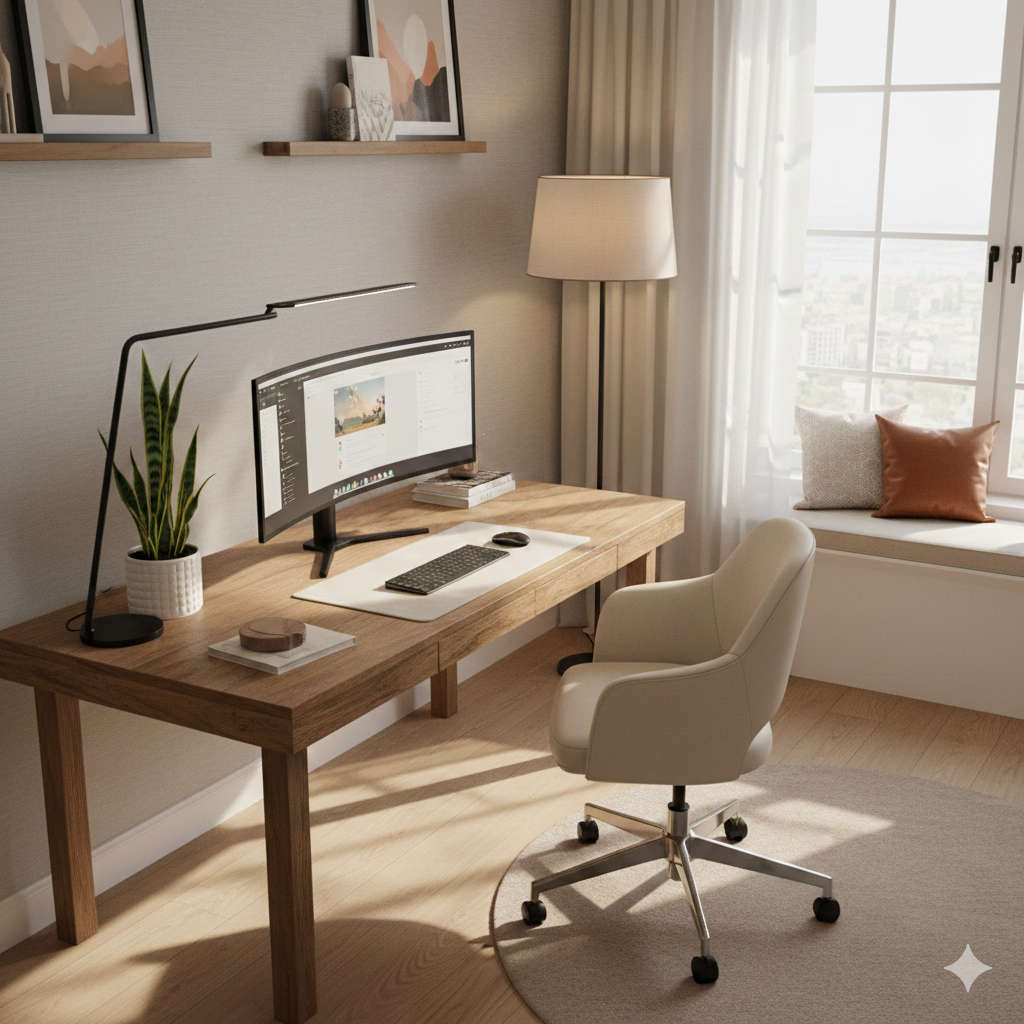
Creating a productive home office goes far beyond choosing a desk and a chair. One of the most overlooked yet powerful elements of a functional workspace is lighting. The right lighting setup can dramatically improve focus, reduce eye strain, enhance mood, and even support better sleep patterns. Poor lighting, on the other hand, can lead to headaches, fatigue, low productivity, and long-term eye discomfort.
As remote work, freelancing, and hybrid jobs continue to grow, investing in proper home office lighting is no longer optional—it is essential. This guide will walk you through everything you need to know about home office lighting, including how to choose the right type, brightness, and color temperature, how to position lights correctly, and which lighting products are worth considering.
Why Proper Home Office Lighting Is So Important
Lighting affects how you feel, how you work, and how long you can stay productive.
Reduces Eye Strain and Fatigue
Working on screens for long hours already places stress on your eyes. Insufficient or uneven lighting forces your eyes to constantly adjust, leading to dryness, soreness, and blurred vision. Good lighting minimizes contrast and makes visual tasks easier.
Improves Focus and Productivity
Bright, well-balanced lighting helps maintain alertness and concentration. Dim spaces can make you feel sleepy, while harsh lighting can be distracting and uncomfortable. Proper lighting keeps your energy steady throughout the workday.
Supports Mood and Mental Wellbeing
Light influences your circadian rhythm. Cooler light promotes alertness during working hours, while warmer tones help the body relax later in the day. A well-lit office feels more motivating and less mentally draining.
Enhances Video Call Appearance
Clear, balanced lighting helps you look professional on video calls by reducing shadows and improving facial clarity.
Understanding the Three Types of Home Office Lighting
A well-lit home office uses layered lighting rather than a single light source.
Ambient Lighting (General Room Lighting)
Ambient lighting provides overall illumination for the entire room. It prevents dark corners and harsh contrasts between light and shadow.
Common ambient lighting options include:
- LED ceiling lights
- Flush-mount or semi-flush fixtures
- Recessed lighting
- LED panel lights
This is the foundation of your lighting setup.
Task Lighting (Focused Work Lighting)
Task lighting is designed to illuminate specific work areas, especially your desk.
Good task lighting:
- Directs light where you need it most
- Reduces shadows on documents and keyboards
- Helps prevent eye strain during detailed work
Desk lamps and adjustable arm lamps fall into this category and are essential for any home office.
Accent Lighting (Comfort and Balance)
Accent lighting adds depth, warmth, and visual balance to your workspace. While not strictly necessary for work tasks, it reduces eye fatigue by softening contrast and makes the office feel more comfortable.
Examples include:
- Floor lamps
- LED light strips
- Wall sconces
Key Lighting Specifications You Should Know
Understanding basic lighting terms helps you choose the right products.
Brightness (Lumens)
Lumens measure how bright a light is.
Recommended brightness levels:
- Desk task lighting: 400–800 lumens
- Ambient room lighting: 1,000–2,000 lumens total
- Large or dark-colored rooms may need more
Avoid lighting that is too dim or excessively bright.
Color Temperature (Kelvin)
Color temperature affects how warm or cool the light appears.
- 2700K–3000K (Warm white): Cozy, relaxing, better for evenings
- 3500K–4100K (Neutral white): Balanced and versatile
- 5000K–6500K (Cool white/daylight): Energizing and ideal for focused work
For most home offices, neutral to cool white light works best during the day.
Color Rendering Index (CRI)
CRI measures how accurately colors appear under a light source.
- CRI 80+: Acceptable
- CRI 90+: Ideal for home offices
Higher CRI reduces eye strain and improves visual clarity.
Flicker-Free and Glare Control
Flickering lights and glare can cause headaches and fatigue. Always choose flicker-free LED lighting and position lamps to avoid reflections on screens.
Best Lighting Options for Home Offices
LED Ceiling Lights and Panels
LED ceiling lights provide even, energy-efficient ambient lighting.
Why they work well
- Long lifespan
- Low energy consumption
- Minimal heat
- Clean, modern look
Recommended products
- Dimmable LED ceiling panel (neutral white)
- Flush-mount LED ceiling light with diffuser
- Surface-mounted LED office light
Pair ceiling lights with task lighting for best results.
Adjustable Desk Lamps (Most Important)
A high-quality desk lamp is the most critical lighting investment for your home office.
What to look for
- Adjustable arm and head
- Dimmable brightness
- Adjustable color temperature
- High CRI (90+)
Recommended desk lamps
- LED architect desk lamp with clamp mount
- Touch-control LED desk lamp with multiple brightness levels
- Minimalist LED desk lamp with eye-care technology
Place the lamp on the opposite side of your dominant hand to reduce shadows.
Floor Lamps for Supplemental Lighting
Floor lamps help fill dark areas and balance lighting in the room.
Best uses
- Offices without ceiling lighting
- Adding warmth to large rooms
- Reducing contrast between desk and background
Recommended floor lamps
- LED torchiere floor lamp with dimmer
- Adjustable arm LED floor lamp
- Slim modern LED floor lamp for small spaces
Smart Lighting for Maximum Control
Smart lighting allows you to adjust brightness and color temperature throughout the day.
Benefits
- Custom lighting schedules
- Easy switching between work and relaxation modes
- App or voice control
Recommended smart lighting products
- Tunable white smart LED bulbs
- Smart LED desk lamp with scheduling features
- Smart LED light strips for accent lighting
Smart lighting is especially useful for long workdays or flexible schedules.
Lighting Setup Based on Office Type
Small Home Office or Desk Nook
Best setup
- Compact LED ceiling or wall light
- Adjustable desk lamp
- Optional LED strip behind monitor
Avoid oversized fixtures that overwhelm the space.
Home Office with Natural Light
Natural light is beneficial but needs control.
Tips
- Place desk perpendicular to windows
- Use blinds or curtains to reduce glare
- Match artificial light color temperature with daylight
Always have task lighting for evenings and cloudy days.
Shared or Multi-Purpose Rooms
When your office doubles as a living space, flexibility is key.
Recommended approach
- Dimmable ambient lighting
- Smart bulbs for quick mode changes
- Desk lamps that can be turned off after work
This keeps the space comfortable beyond working hours.
Best Lighting for Video Calls and Virtual Meetings
Lighting can make a major difference in how you appear on camera.
Front-Facing Light Is Essential
Use a soft light source in front of you, slightly above eye level.
Recommended products
- LED ring light with adjustable brightness
- Soft LED panel light with diffuser
- Desk lamp with frosted shade behind the camera
Avoid Backlighting
Bright windows or lamps behind you create shadows on your face. Always light from the front.
Ideal Color Temperature for Video
Neutral to slightly warm light (4000K–4500K) produces the most natural appearance.
Common Home Office Lighting Mistakes to Avoid
- Using only one light source
- Choosing warm lighting for long work sessions
- Ignoring glare from screens
- Buying lamps based only on appearance
- Skipping task lighting altogether
Avoiding these lighting mistakes can instantly improve comfort and productivity.
Energy Efficiency and Sustainability
LED lighting is the best choice for home offices.
Why LEDs are ideal
- Use significantly less energy
- Last much longer than traditional bulbs
- Produce minimal heat
- Lower electricity bills
Choose dimmable LEDs and smart lighting to further reduce energy use.
Step-by-Step Guide to Setting Up Home Office Lighting
Step 1: Assess the Room
Note room size, ceiling height, wall color, and window placement.
Step 2: Plan Lighting Zones
Create separate zones for task, ambient, and accent lighting.
Step 3: Choose the Right Fixtures
Select ceiling lights for ambient lighting, desk lamps for tasks, and floor or accent lights for balance.
Step 4: Adjust and Test
Test lighting at different times of day. Adjust angles and brightness to minimize glare and shadows.
Quick List of Recommended Home Office Lighting Products
Best Desk Lamps
- Adjustable LED architect desk lamp
- Touch-control LED desk lamp with color temperature modes
Ambient Lighting
- Dimmable LED ceiling panel
- Flush-mount LED ceiling light with diffuser
Floor Lamps
- LED torchiere floor lamp with dimmer
- Adjustable arm LED floor lamp
Smart Lighting
- Tunable white smart LED bulbs
- Smart LED desk lamp with scheduling
Final Thoughts
Lighting is one of the most powerful upgrades you can make to your home office. The right lighting setup improves productivity, reduces eye strain, enhances mood, and supports long-term health.
By combining ambient, task, and accent lighting, choosing the right brightness and color temperature, and investing in quality LED products, you can create a workspace that truly supports your work and wellbeing.
A well-lit home office is not just more comfortable—it is more professional, more efficient, and far more sustainable over time.