
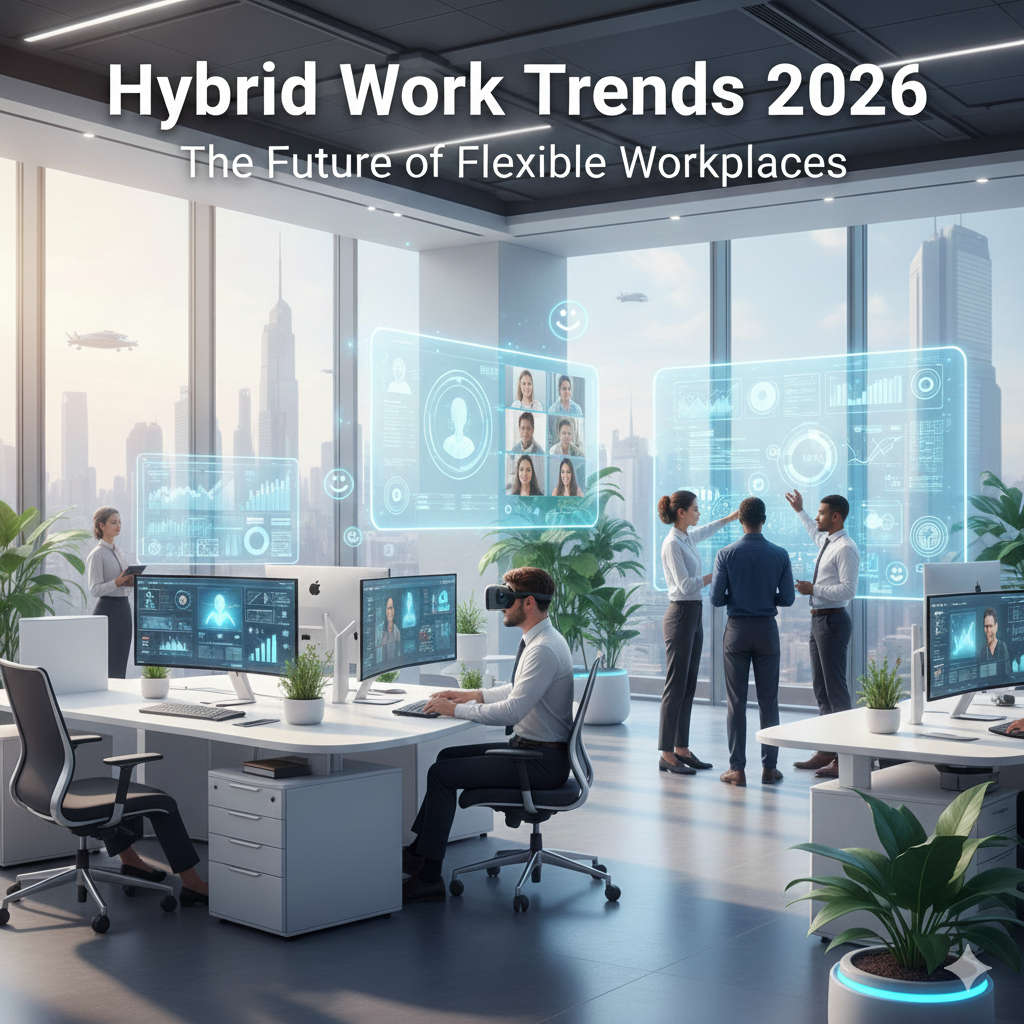
As we close out 2025, it’s clear that hybrid work has moved far beyond a pandemic-era workaround. It’s now a cornerstone of modern employment, blending the freedom of remote days with the collaboration of in-office time. Looking ahead to 2026 and beyond, this model is evolving into something more intentional, tech-savvy, and employee-focused. If you’re a professional navigating career options, a manager building team cohesion, or a leader planning workspace strategies, these trends will help you stay prepared and proactive.
In this guide, we’ll explore the key shifts shaping hybrid work— from structured policies and AI integration to rising demands for well-being and bold predictions for the years ahead. Packed with practical tips and real-world insights, this post aims to make your transition smoother and more successful.
How Hybrid Work Is Maturing: From Flexible to Structured
Hybrid setups have settled in as the preferred model for many knowledge-based roles. Companies are moving away from loose “work whenever” policies toward clear guidelines, often requiring two to three office days per week focused on teamwork, brainstorming, or mentoring. This structured approach helps balance individual focus (best done remotely) with group synergy (thriving in person).
Many organizations are redesigning offices as collaboration hubs rather than rows of desks, incorporating flexible spaces like coworking areas or quiet pods. This shift supports productivity while addressing common pain points like isolation or unplanned distractions.
Helpful tip: If you’re in a hybrid role, track your most productive days and environments for a week. Share your findings with your manager to co-create a schedule that maximizes your output and energy.
Technology Driving the Next Wave: AI and Immersive Tools
By 2026, artificial intelligence will be deeply woven into daily workflows, acting as a reliable assistant for scheduling, note-taking, summarizing meetings, and even sparking ideas during brainstorms. Tools that predict workload spikes or suggest optimal collaboration times are becoming commonplace, freeing people to focus on creative and strategic tasks.
Virtual and augmented reality are gaining traction too, turning remote meetings into immersive experiences where team members feel truly present. Imagine walking through a digital workspace or interacting with 3D models alongside colleagues worldwide—no travel required.
Smart offices are another highlight: sensors that adjust lighting and temperature, automated desk bookings, and AI-enhanced security to protect distributed teams.
Pro tip for managers: Start small with AI adoption—pilot one tool for meeting summaries across your team. Gather feedback after a month and scale what works best.
What Employees Are Prioritizing in Hybrid Environments
Flexibility remains the top draw, with many professionals valuing the ability to tailor their week around life commitments. Well-being is rising fast—expect more emphasis on mental health support, predictable schedules, and boundaries to prevent burnout.
Social connection is key too. Hybrid workers miss casual interactions, so companies are introducing virtual social events, in-person retreats, and tools that facilitate spontaneous chats.
Career growth in distributed teams can feel trickier, so look for opportunities like virtual mentorship programs or skill-building workshops.
Actionable advice: Build your own “connection routine”—schedule weekly coffee chats with colleagues or join industry online communities to combat isolation and expand your network.
Employer Approaches: Balancing Mandates with Attraction
Leaders are refining policies to attract talent in a competitive market. While some push for more office time, most recognize that flexibility boosts retention. Expect differentiated models: fully remote for certain roles, hybrid for others, based on job needs rather than one-size-fits-all rules.
Global hiring is expanding talent pools, with adjustments for location-based pay and time zones. Sustainability plays a role too—hybrid reduces commutes and office energy use.
For leaders: Run anonymous surveys twice a year to gauge what your team values most in their hybrid setup. Use the data to tweak policies and show you’re listening.
Navigating Common Hybrid Challenges
Communication gaps can arise when teams are split. Counter this with clear protocols, like defaulting to video calls and documenting decisions in shared tools.
Trust and visibility issues persist for some managers. Focus on outcomes: set clear goals and measure results, not hours logged.
Blurring work-life boundaries leads to fatigue. Encourage “unplug” rituals and respect off-hours unless urgent.
Cybersecurity grows more critical with distributed work—prioritize training and secure tools.
Quick fix: Use time-blocking apps to protect deep-focus periods, whether at home or in the office.
Looking Further Ahead: Predictions for 2026 and Beyond
Hybrid models will become even more personalized, with AI helping tailor schedules and predict needs. Borderless teams will normalize, blending in-house, remote, and freelance talent seamlessly.
Well-being integrations—like apps tracking stress or offering personalized wellness plans—will be standard perks.
Skills-based hiring will dominate, prioritizing adaptability and digital fluency over traditional credentials.
Four-day weeks and other experiments may gain ground if they prove productivity gains.
To thrive, invest in continuous learning: master AI tools, communication platforms, and emotional intelligence for leading distributed teams.
Embracing the Hybrid Future
The road to 2026 shows hybrid work becoming smarter, more human-centered, and deeply integrated with technology. By focusing on clear structures, employee needs, and innovative tools, both individuals and organizations can unlock greater productivity, satisfaction, and resilience.
What’s working best in your hybrid setup right now? Or what change are you hoping for in 2026? Drop your thoughts in the comments—I’d love to hear your experiences and ideas!